
Why Is Follow-Up Care Important After a Hair Transplant?
Traveling to Mexico for hair transplantation allows US patients to receive surgical treatment abroad, but recovery continues long after they return home. Although the initial procedure may be completed during a short visit, the scalp still needs time to heal, and the transplanted follicles must progress through several stages before producing mature hair.
Follow-up care helps distinguish expected postoperative changes from symptoms that require medical attention. Temporary swelling, crusting and shedding are common during recovery, whereas increasing pain, spreading redness or unusual discharge may indicate a problem that needs evaluation.
The distance between the patient and the surgical team introduces an additional consideration. Rather than relying exclusively on communication with the provider in Mexico, patients should know where they can obtain an in-person examination in the United States if necessary. Establishing that arrangement before traveling makes the postoperative period easier to manage.
What Should You Arrange Before Leaving Mexico?
The final postoperative appointment in Mexico is an important opportunity to clarify the recovery plan. Before returning home, patients should understand when they can wash their scalp, which medications they need, what activities remain restricted and how to contact the surgical team if concerns develop.
A complete set of medical records is equally valuable. This should include the procedure date, extraction technique, approximate graft count, areas treated, medications administered and any complications that occurred during surgery. Patients who underwent FUT should also receive clear information about the donor incision and any sutures requiring removal.
Records should be available in English or accompanied by an accurate translation so that a US healthcare professional can review them without unnecessary delays. Keeping digital copies alongside the original documents provides convenient access during follow-up appointments or unexpected medical visits.
It is also helpful to identify a dermatologist or other appropriately qualified healthcare professional near home who can assess postoperative concerns. Arranging this before the procedure is more reliable than searching for medical support after a complication has already developed.
When Can You Fly Back to the US After a Hair Transplant?
There is no single medically established flight schedule that applies to every hair transplant patient. The decision to travel should reflect the extent of surgery, the condition of the scalp, any complications and the length of the journey.
Flying very soon after surgery may be uncomfortable because swelling and tenderness can increase during the first several days. Airports also involve crowded spaces, security procedures and the possibility of accidentally bumping the recipient area while handling luggage.
Long journeys introduce another consideration: remaining seated for prolonged periods can increase the risk of blood clots, particularly after surgery. Although hair transplantation is generally less invasive than major abdominal or orthopedic operations, patients should still consider their personal risk factors and postoperative condition before flying.
During travel, gentle walking when permitted, normal hydration and avoiding unnecessary pressure on the scalp can make the journey more manageable. Patients should never begin blood-thinning medication solely for a flight without appropriate medical advice, since doing so may introduce bleeding risks.
The First 72 Hours After Returning Home
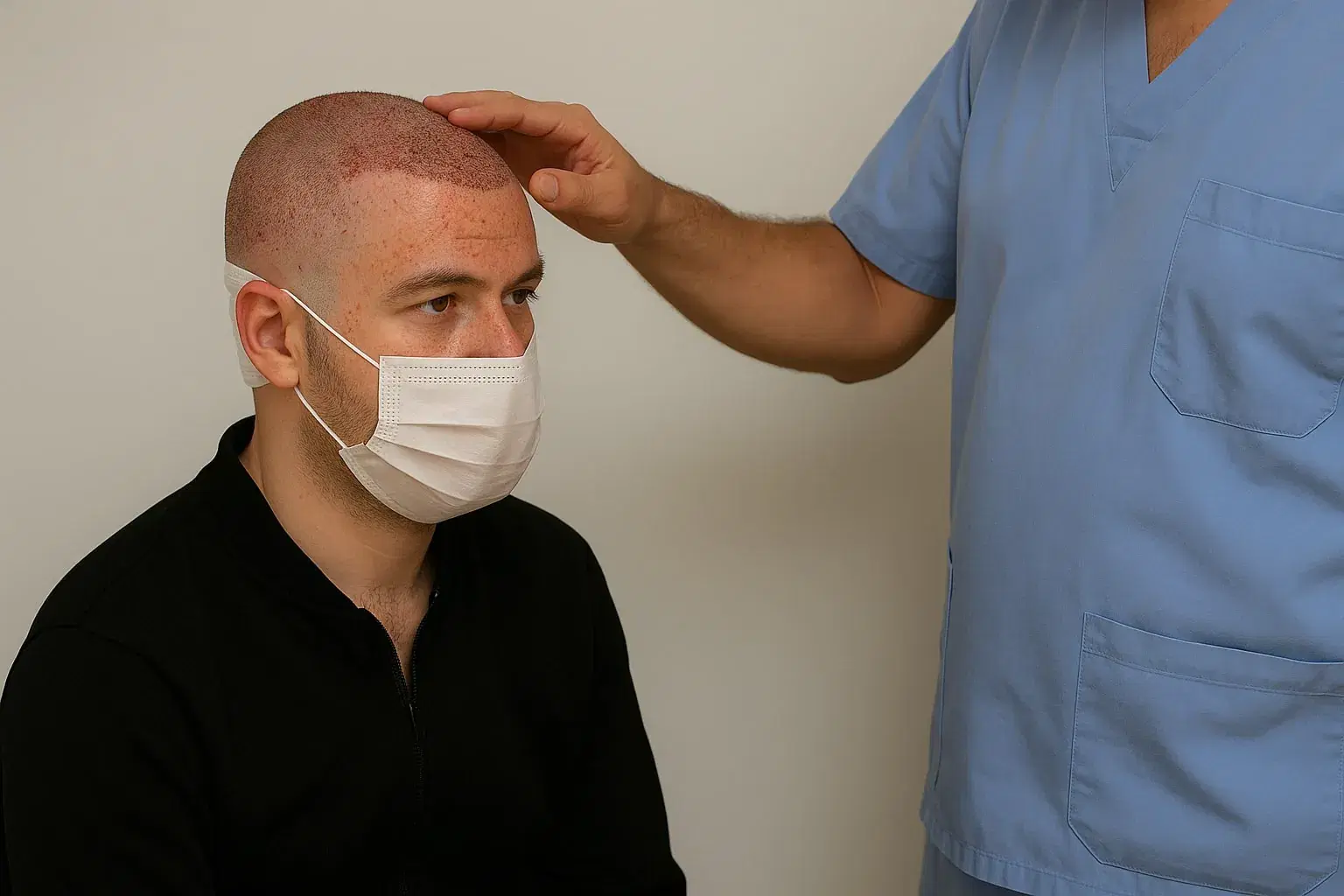
The first few days after hair transplantation are primarily about protecting the recipient area and allowing the surgical wounds to begin healing. Small crusts may form around implanted follicles, while the donor region can feel tender or tight. Swelling around the forehead may also become more noticeable during this period.
Patients should follow the washing instructions provided after surgery rather than experimenting with ordinary shampoos or intensive scalp treatments. Gentle cleansing is usually introduced during the early recovery period, but newly implanted areas should not be scratched, rubbed or exposed to strong water pressure.
Sleeping arrangements also matter. Keeping the head slightly elevated during the initial nights may help reduce discomfort and swelling while limiting accidental contact with pillows. Clean bedding and sufficient rest contribute to a more comfortable recovery without requiring complicated additional products.
The guide to hair transplant aftercare and scalp protection provides further information about washing, sleeping and avoiding unnecessary irritation while grafts become established.
What Happens During the First Two Weeks of Recovery?
During the first week, the scalp commonly develops small crusts around the implanted follicles as the surface wounds close. Some redness and tenderness may remain visible, particularly when the hair was shaved before transplantation. These changes generally improve gradually rather than disappearing immediately.
By approximately days 10 to 14, many crusts have loosened and the scalp is more comfortable. However, patients should avoid forcefully removing them, since scratching can injure healing tissue and create unnecessary inflammation.
The donor area also requires attention. FUE leaves multiple small extraction sites that heal individually, while FUT produces a linear incision that may require suture or staple removal. Patients who return to the US before that step must arrange an appropriate local appointment.
Normal healing should show a general trend toward improvement. Increasing discomfort, expanding redness or persistent drainage should not be dismissed simply because some postoperative irritation is expected.
How to Arrange Hair Transplant Follow-Up Appointments in the US
A local follow-up appointment provides an opportunity to assess wound healing, scalp inflammation and the condition of the donor region. It becomes particularly useful when symptoms are difficult to evaluate through photographs or when the patient has questions about medication and postoperative care.
A dermatologist familiar with hair disorders can help investigate persistent scalp symptoms or unexpected shedding. For concerns involving the surgical wound itself, a physician experienced in postoperative wound assessment may also be appropriate.
Patients should bring their operative records, medication list and photographs taken before and immediately after transplantation. These details help establish what the scalp looked like before surgery and which areas received grafts.
Not every patient needs repeated in-person appointments during uncomplicated healing. However, identifying a reliable local medical contact ensures that support is available if recovery does not progress as expected.
Can the Surgical Team in Mexico Provide Remote Follow-Up?
Remote follow-up can support communication after international hair transplantation, particularly when the surgical team already understands the original treatment plan. Photographs and video consultations may help document crusting, swelling, early growth and changes in the donor area.
For useful comparisons, patients should photograph the same regions under similar lighting conditions. Frontal, overhead and side views provide more information than a single close-up image, especially when monitoring hairline coverage or redness.
However, photographs cannot reliably establish every complication. An image may not reveal the depth of a wound, the extent of tenderness or the presence of an underlying infection. Significant symptoms therefore require timely local assessment rather than waiting for a response from another country.
A practical follow-up arrangement combines continued communication with the original surgical team and access to a US healthcare professional when an examination is needed.
Recognizing Normal Swelling and Possible Complications
Swelling after hair transplantation often develops around the forehead during the first several days. Fluid introduced during surgery and the body's normal inflammatory response can cause temporary puffiness, which may move toward the eyebrows or eyelids before resolving.
Mild swelling that gradually improves is different from redness or inflammation that becomes increasingly painful. Persistent warmth, spreading redness, fever, foul-smelling drainage or unusual discharge may indicate infection and requires prompt evaluation.
Patients can review the explanation of swelling after a hair transplant to understand why postoperative fluid sometimes affects the forehead and how normal swelling generally progresses.
Complications following surgery abroad should be assessed without delay. US healthcare professionals should be told that the procedure took place in Mexico because the location and treatment history can influence how an infection is investigated.
Severe symptoms, including difficulty breathing, chest pain or sudden significant leg swelling after travel, require emergency medical attention rather than routine transplant follow-up.
Hair Shedding After Returning to the United States
Many patients become concerned when transplanted hair begins falling out several weeks after surgery. This temporary shedding commonly occurs between two and eight weeks, when the visible hair shafts detach as the follicles enter a resting phase.
The process can make the recipient area appear thinner than it did immediately after implantation. In some cases, surrounding native hair also sheds temporarily in response to surgical stress, creating an additional reduction in visible density.
These changes should not automatically be interpreted as graft failure. A transplanted follicle can remain beneath the skin after its initial shaft sheds and later produce another strand.
However, shedding accompanied by significant inflammation, painful lesions or expanding areas of scalp damage deserves evaluation. The important distinction is between normal changes in the growth cycle and a scalp condition that may interfere with healthy recovery.
Monitoring Hair Growth From Month Three to Month Twelve
Once the initial surgical wounds have healed, follow-up shifts from wound care toward assessing follicular growth and the overall appearance of the restoration. New hair commonly begins emerging around the third or fourth month, although the first strands may be fine and uneven.
Between six and nine months, transplanted hair often becomes more visible as additional follicles enter active growth and existing strands gain length. Patients may begin noticing improvements around the frontal hairline, but the final appearance remains incomplete for many individuals.
By approximately twelve months, much of the visible frontal result has developed. Crown coverage and hair texture can continue maturing beyond that point, meaning an early assessment may underestimate the eventual outcome.
Periodic photographs help document these changes without relying on daily observations, which can be misleading when growth occurs gradually. Consistent images also provide useful information if the patient later seeks an in-person assessment of density or hairline design.
Returning to Work, Exercise and Everyday Activities
Many patients with desk-based jobs can resume light duties within several days, although taking approximately one week away from work may allow more comfortable recovery. Jobs involving heavy lifting, excessive sweating or protective helmets often require a longer period of restricted activity.
Exercise should return gradually because strenuous movement can increase swelling, discomfort and the risk of accidental scalp trauma during early healing. Light walking is generally less demanding, while intensive workouts and physically demanding tasks may need to remain restricted for several weeks.
Sun protection is another important consideration after returning home. Newly treated scalp areas can remain sensitive, making prolonged direct sunlight undesirable during the initial recovery period.
Patients should also postpone swimming, aggressive styling and chemical hair treatments until the skin has healed sufficiently. Returning to normal routines too quickly offers little benefit if it creates irritation that could otherwise have been avoided.
Managing Medication and Long-Term Hair Loss Treatment
Patients returning from Mexico should understand the purpose and duration of every postoperative medication they were given. Prescription instructions, allergies and possible drug interactions deserve particular attention when treatment continues after international travel.
Medicines should remain in their original packaging whenever possible, accompanied by written information about the active ingredients and prescribed doses. If a US healthcare professional needs to review the treatment, this documentation helps avoid confusion between products with different brand names.
Long-term hair loss medication is a separate issue from short-term surgical recovery. Some patients use treatments intended to preserve native hair because transplantation does not stop hereditary thinning in areas that were not restored.
Any decision to restart topical scalp medication should account for wound healing. Applying products too early can irritate the recipient area, making it important to distinguish long-term hair maintenance from immediate postoperative care.
Will US Health Insurance Cover Follow-Up Care After Surgery in Mexico?
Financial planning should include the possibility of needing follow-up treatment after returning to the United States. Hair transplantation performed for hereditary baldness is generally classified as cosmetic, meaning the original procedure is usually not covered by standard health insurance.
Coverage for subsequent medical care is more complicated. A consultation, infection treatment or other postoperative service may be covered under some circumstances, but insurers can apply exclusions related to cosmetic procedures or complications arising from them.
Patients should review their policy before traveling rather than assume that every unexpected expense will be reimbursed. The cost of local appointments, prescriptions, diagnostic testing or treatment for complications may need to be paid privately.
Remote follow-up included in an overseas treatment package should also be distinguished from access to medical care in the US. Online communication may provide useful guidance, but it does not necessarily cover the cost of local examination or treatment.
What If Your Hair Transplant Results Are Disappointing?
Hair transplantation requires patience because the final outcome cannot be judged during the first few months. Temporary shedding, uneven early growth and differences in hair length can make a normal recovery appear disappointing before the follicles have matured.
A more reliable assessment usually becomes possible around twelve months after surgery, with additional time sometimes needed for crown restoration. Photographs taken before treatment, immediately afterward and at regular intervals can help establish whether density has improved.
If substantial gaps remain after the expected maturation period, a detailed scalp examination may identify poor graft growth, continued native hair loss or other contributing factors. These possibilities require different responses and should not automatically lead to another operation.
Corrective transplantation also depends on the condition of the remaining donor hair. Before considering further surgery, patients should understand whether the original procedure achieved its intended coverage and whether additional graft extraction would be appropriat.