
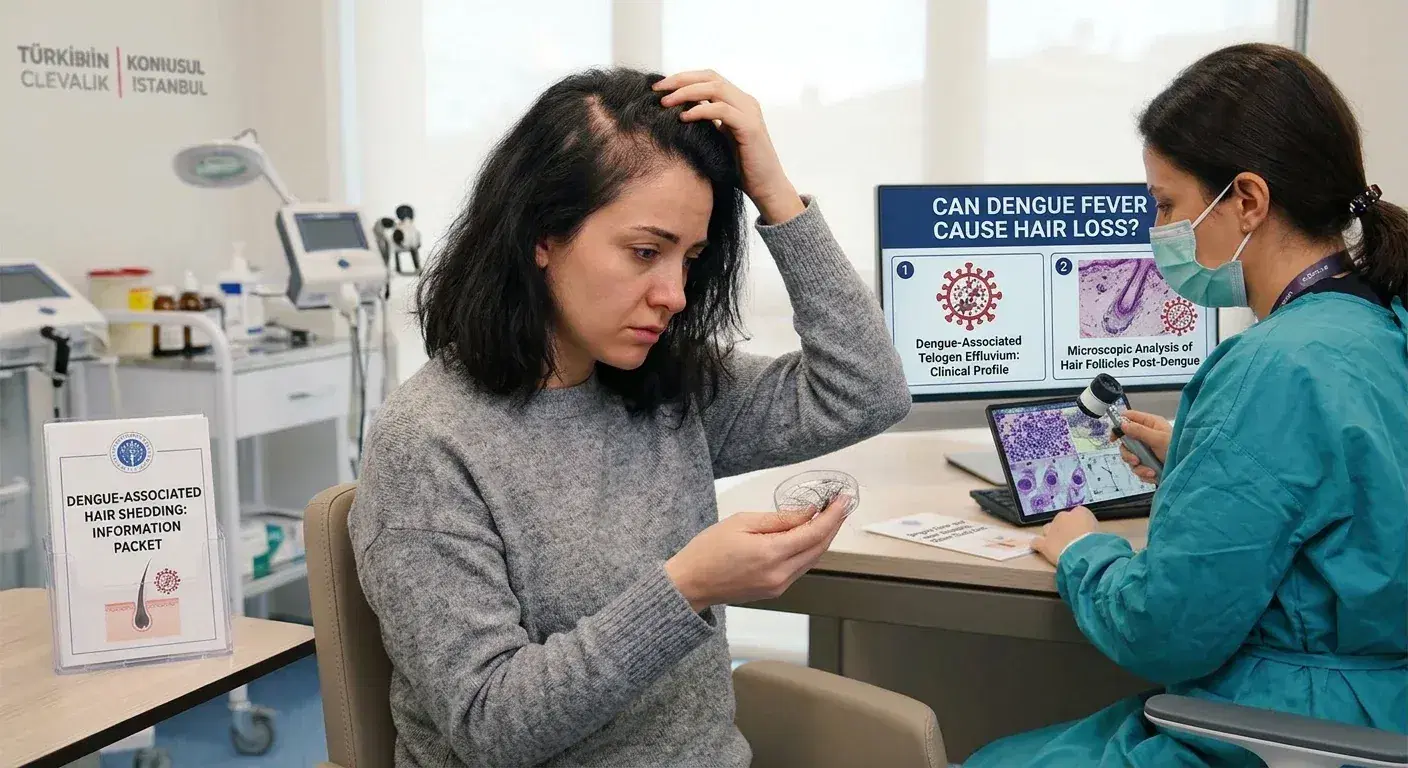
Dengue fever can cause temporary hair loss, most commonly through a condition called telogen effluvium, which develops when the physical stress of infection disrupts the natural hair growth cycle. Shedding may begin several weeks or months after the fever resolves, but the affected follicles generally remain capable of producing new hair as the body recovers.
Why Does Hair Loss Occur After Dengue Fever?
Dengue fever is a mosquito-borne viral infection that can cause high fever, headaches, muscle pain, nausea, and significant fatigue. Although the acute illness often resolves within approximately one week, the effects of infection can extend beyond the disappearance of its most recognizable symptoms.
Hair follicles are particularly sensitive to physiological disturbances because they continuously produce new cells during their active growth phase. When the body experiences substantial stress from fever, inflammation, or illness, some follicles may prematurely stop active hair production and enter a resting stage.
This interruption does not necessarily cause immediate hair loss. Instead, the affected strands remain attached for a period before eventually shedding, which explains why noticeable thinning may develop after someone has otherwise recovered from dengue.
How Does Dengue Fever Affect the Hair Growth Cycle?
Hair grows through a repeating biological cycle consisting of anagen, catagen, telogen, and exogen phases. Each stage performs a different function, from active hair production to the eventual release of an existing strand.
During anagen, follicles produce hair continuously, often remaining active for several years. Catagen marks the transition away from growth, while telogen represents a resting period before the hair is eventually shed during exogen.
A significant infection can disturb this balance by encouraging more follicles than usual to enter the resting phase. When these follicles release their strands within a relatively short period, the result becomes visible as increased hair shedding throughout the scalp.
Dengue-related hair loss generally follows this pattern rather than directly destroying healthy follicles, which is an important distinction when considering the possibility of regrowth.
Telogen Effluvium After Dengue Fever
Telogen effluvium is the main form of hair loss associated with dengue fever. It causes diffuse shedding, meaning hair falls out across different areas of the scalp rather than disappearing exclusively from the temples or crown.
Research examining hair loss following dengue infection has identified telogen effluvium as a common presentation among affected patients. A retrospective investigation involving 1,302 dengue cases identified 15 patients with associated hair loss, although this finding should not be treated as a universal incidence rate because the investigation involved a specific hospital population.
The condition may become particularly noticeable during washing or brushing, when numerous strands that have already completed their resting phase detach together.
Unlike scarring forms of alopecia, telogen effluvium usually leaves the follicular structures intact. This allows the hair growth cycle to recover once the triggering illness and any additional physiological disturbances have resolved.
For a more detailed explanation of this process, the guide to telogen effluvium and hair regrowth examines the causes, symptoms, and typical recovery stages associated with temporary shedding.
What Causes Excessive Hair Shedding After Dengue?
Several factors may contribute to hair shedding after dengue infection, and their effects can overlap during recovery.
High Fever and Physiological Stress
High fever places additional demands on the body as it responds to infection. This physiological stress can temporarily influence processes that are not essential for immediate survival, including active hair production.
A prolonged or intense fever may therefore contribute to changes in the hair growth cycle, even when the person has no previous history of significant shedding.
Inflammation and Immune Response
Dengue activates the immune system and triggers inflammatory signaling throughout the body. These responses are necessary for controlling infection, but substantial systemic inflammation may also influence the environment in which hair follicles function.
Researchers continue investigating the relationship between inflammatory activity and post-dengue alopecia. Current findings support an association, although the precise biological mechanisms have not been fully established.
Reduced Appetite and Nutritional Intake
Nausea, vomiting, reduced appetite, and fatigue can make adequate nutrition difficult during dengue infection. When illness interferes with food intake for an extended period, the body may receive insufficient energy or essential nutrients needed for normal hair production.
Nutritional problems are not necessarily the primary cause of dengue-related shedding, but significant weight loss or existing deficiencies may contribute to prolonged recovery.
When Does Hair Loss Start After Dengue Fever?
Hair loss following dengue fever can begin during the recovery period or develop several weeks afterward. In many cases, shedding becomes noticeable approximately one to three months after the original illness, although published observations have documented earlier onset.
This delay reflects the natural behavior of follicles entering the resting phase. Hair that stops actively growing during an infection does not immediately detach, so the consequences of physiological stress may only become visible after the original symptoms have disappeared.
Someone who recovered from dengue in June, for example, might begin noticing increased hair shedding in July or August. The timing can initially seem unrelated to the previous infection, particularly when energy levels and general health have already improved.
Understanding this delayed response helps distinguish post-infectious shedding from hair loss caused by more recent events.
What Does Dengue-Related Hair Loss Look Like?
Dengue-related telogen effluvium usually causes widespread thinning rather than clearly defined bald patches. Many people first notice unusually large amounts of hair collecting in the shower, on their pillow, or around a hairbrush.
The overall volume may gradually decrease, making the scalp more visible under bright lighting. Individuals with longer hair may notice that their ponytail feels thinner, while those with shorter hairstyles may recognize reduced coverage across the upper scalp.
Hair shedding can appear dramatic even when the follicles themselves remain healthy. However, pronounced redness, scaling, pain, or isolated bald patches are not typical features of uncomplicated telogen effluvium and may indicate another condition.
How Long Does Hair Loss After Dengue Last?
The duration of post-dengue hair loss depends partly on the recovery of the underlying physiological disturbance. Acute telogen effluvium commonly settles within three to six months after shedding begins, although the return of visible hair density can take longer.
First One to Three Months of Shedding
During the initial shedding period, hair fall may remain noticeably higher than usual. Existing strands detach as affected follicles complete their resting phase, sometimes producing a rapid reduction in overall volume.
This stage can be particularly concerning because the amount of hair falling out may seem disproportionate to the severity of the original infection.
Three to Six Months: Shedding Begins to Improve
As the body recovers and more follicles resume active growth, excessive shedding often gradually decreases. Fine new strands may become noticeable near the hairline or along the central part.
Hair growth does not resume at exactly the same time in every follicle, so improvements in coverage generally develop gradually.
Six to Twelve Months: Hair Density Recovers
Many individuals experience substantial improvements in visible hair density during the following months. However, regaining the previous hair length and volume may require additional time because scalp hair grows at an average rate of approximately one centimeter per month.
Persistent thinning beyond the expected recovery period should prompt evaluation for other contributing conditions.
Is Hair Loss After Dengue Permanent?
Hair loss caused by post-dengue telogen effluvium is generally temporary because the follicles are not usually destroyed. Once the growth cycle stabilizes, affected follicles can produce new strands and gradually restore scalp coverage.
However, not every episode of hair loss after dengue is necessarily caused by telogen effluvium. Genetic hair thinning, thyroid disorders, nutritional deficiencies, and inflammatory scalp conditions can produce overlapping symptoms.
In some individuals, acute shedding makes existing androgenetic alopecia more noticeable. The temporary reduction in density may reveal an underlying pattern of thinning that was already developing before the infection.
This explains why some people experience a complete recovery while others continue noticing reduced coverage after the post-infectious shedding has settled.
Can Dengue Fever Cause Hair Loss in Women and Men?
Dengue-related shedding can affect both women and men because the physiological response associated with telogen effluvium is not limited to one sex.
Some clinical observations have reported more affected women than men, but the available research does not establish that women are inherently more susceptible to this complication.
Women may notice changes in their central part or overall hair volume, while men may become particularly concerned about thinning around the crown or frontal scalp.
The important distinction involves the pattern and timing of hair loss rather than sex alone. Sudden widespread shedding after a significant illness generally suggests a different mechanism from gradual hereditary baldness.
Can Low Platelet Counts Cause Hair Loss After Dengue?
Dengue infection frequently causes a temporary reduction in platelet counts, a condition known as thrombocytopenia. Platelets play an essential role in blood clotting, and substantial reductions can increase the risk of bleeding during acute illness.
Some research has identified an association between lower platelet counts and hair loss among patients recovering from dengue. However, these findings do not demonstrate that low platelets directly cause follicular shedding.
Platelet abnormalities may reflect the severity of the underlying illness or other physiological disturbances occurring during infection.
For this reason, platelet measurements should be interpreted as part of dengue assessment rather than used alone to predict whether a patient will develop hair loss.
How to Support Hair Regrowth After Dengue Fever
Recovery from post-infectious shedding primarily involves allowing the hair growth cycle to normalize while addressing factors that may interfere with follicular function.
Maintain Adequate Protein and Nutritional Intake
Hair follicles require sufficient energy, protein, iron, zinc, and other essential nutrients to support normal growth. A balanced diet containing varied protein sources, vegetables, fruits, whole grains, and healthy fats helps provide the nutrients needed during recovery.
However, taking large quantities of supplements without a confirmed deficiency does not guarantee faster regrowth. Excessive intake of certain nutrients can itself contribute to hair problems.
Use Gentle Hair Care Products
Temporary shedding may make hair feel noticeably thinner, but aggressive washing or brushing can increase breakage and create unnecessary scalp irritation.
Mild shampoos, careful detangling, and reduced use of high-temperature styling tools can help preserve the condition of existing strands.
Normal washing does not cause telogen effluvium, although it may release hairs that were already ready to shed.
Allow Time for Normal Follicular Recovery
Hair follicles follow biological growth cycles that cannot be instantly accelerated through cosmetic treatments. Consistent nutrition, sufficient rest, and recovery from the underlying illness provide a more appropriate foundation than repeatedly changing products in response to daily shedding.
Does Minoxidil Help Hair Loss After Dengue?
Minoxidil is an established treatment for certain forms of hair loss, particularly androgenetic alopecia. Its effectiveness for uncomplicated acute telogen effluvium following dengue remains less certain because many affected individuals recover without medication.
In persistent cases, minoxidil may be considered as part of a broader treatment approach, particularly when another form of hair thinning occurs alongside post-infectious shedding.
However, starting minoxidil can temporarily increase shedding, which may complicate the assessment of an already active hair loss episode.
The decision to use hair growth medication should therefore follow identification of the underlying hair loss pattern rather than assuming every case requires pharmaceutical treatment.
How Is Post-Dengue Hair Loss Diagnosed?
Assessment begins with reviewing the timing of dengue infection, the onset of shedding, and any additional changes in health. A diffuse pattern developing several weeks after a significant fever may be consistent with telogen effluvium.
A scalp examination can help identify signs of follicular miniaturization, inflammation, or patchy hair loss. When indicated, blood tests may investigate iron deficiency, thyroid abnormalities, anemia, or other contributing conditions.
A previous dengue diagnosis does not automatically explain every episode of hair thinning. Reviewing the wider range of possible causes of sudden hair loss can help clarify why accurate identification of the underlying condition matters.
During acute dengue, severe abdominal pain, persistent vomiting, bleeding, or marked weakness require urgent medical attention because these symptoms may indicate a serious complication unrelated to later hair shedding.
Is a Hair Transplant Necessary After Dengue-Related Hair Loss?
Hair transplantation is generally unnecessary when shedding results from acute telogen effluvium because the affected follicles usually remain capable of producing new hair.
A transplant redistributes existing follicles from a donor area into regions affected by permanent hair loss. It does not directly correct the temporary growth-cycle disturbance associated with post-infectious shedding.
Considering surgery before the hair growth cycle has stabilized can also make the extent of permanent thinning difficult to assess.
Transplantation becomes more relevant when a separate, established form of permanent hair loss is present and adequate donor follicles are available.
Frequently Asked Questions About Hair Loss After Dengue
The following questions address common concerns about regrowth, the timing of shedding, and whether dengue-related hair loss requires treatment.
Will hair grow back after dengue fever? Hair usually grows back when dengue-related shedding develops through temporary telogen effluvium, as the affected follicles generally remain intact. Excessive hair fall often decreases within several months, while visible density can continue improving over six to twelve months as new strands gain length.
Can hair loss begin two months after recovering from dengue? Shedding that begins approximately two months after dengue is consistent with the delayed pattern of post-infectious telogen effluvium. The original fever may have interrupted the growth cycle weeks earlier, causing affected strands to detach only after the person has recovered from the initial illness.
Do you need hair growth supplements after dengue fever? Supplements are most useful when they correct an identified nutritional deficiency that affects normal follicular function. People recovering from dengue do not automatically need high-dose vitamins or specialized hair formulas, and unnecessary supplementation may introduce risks without improving the natural regrowth process.
Final Thoughts on Dengue Fever and Hair Loss
Dengue fever can trigger temporary hair shedding by disrupting the natural growth cycle, most commonly through telogen effluvium. The hair loss may become noticeable weeks or months after infection, even when other symptoms have already resolved.
Most affected follicles remain capable of regrowth, and shedding commonly improves over several months as the body recovers. Maintaining balanced nutrition, avoiding unnecessary scalp irritation, and investigating persistent thinning can help support recovery while distinguishing temporary post-dengue hair loss from conditions requiring specific treatment.