
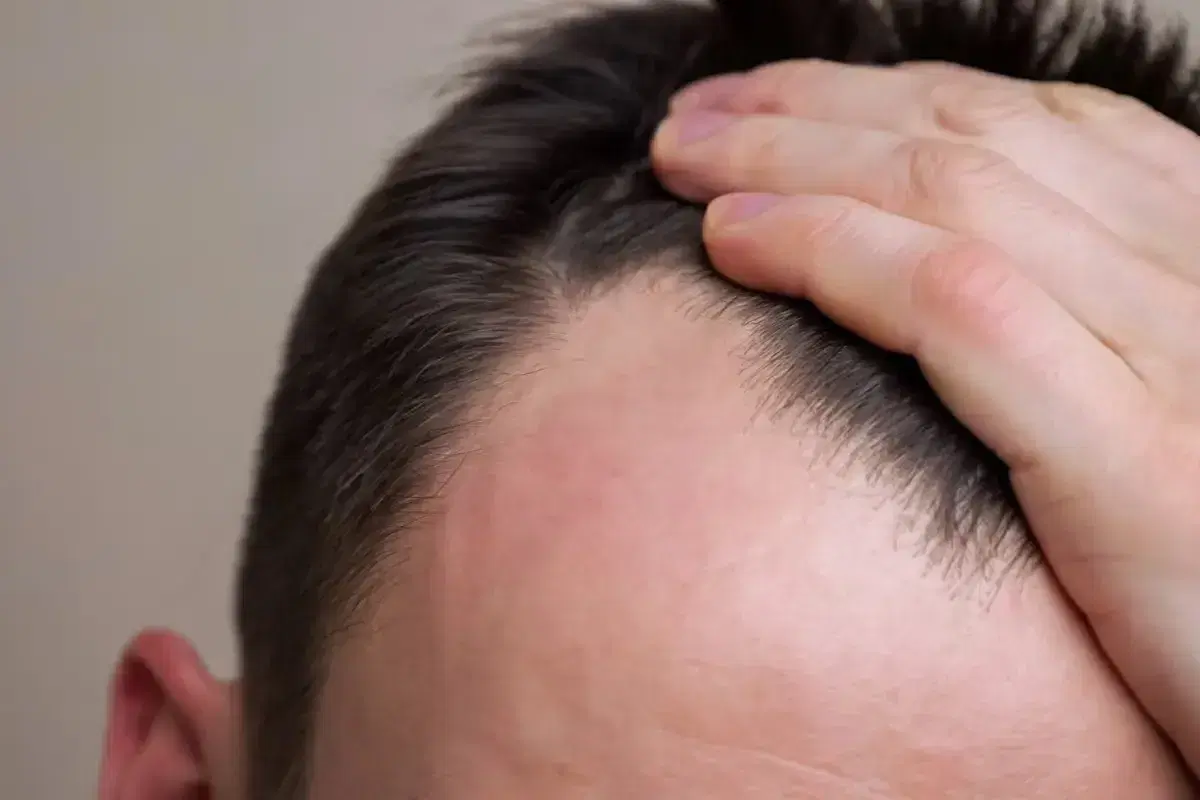
Can Dehydration Really Cause Hair Loss?
The idea that drinking too little water causes hair loss sounds convincing because water is essential for healthy cells and normal body function. Hair follicles are living structures that rely on an adequate blood supply, oxygen and nutrients to support growth, so it is reasonable to question whether insufficient hydration might affect them.
However, there is an important difference between biological plausibility and demonstrated medical evidence. Research has not established ordinary, mild dehydration as a direct cause of androgenetic alopecia, patchy baldness or persistent follicular hair loss. Drinking additional water has likewise not been shown to reverse these conditions.
Severe dehydration deserves separate consideration because it can accompany significant illness and physiological stress. Those circumstances may disrupt the normal hair growth cycle, but dehydration cannot automatically be identified as the cause when fever, infection, poor nutrition or substantial weight loss are also present.
The most accurate conclusion is that hydration supports overall health, while hair loss requires a more specific explanation than simply not drinking enough water.
How Water Supports the Scalp and Hair Follicles
Hair follicles are metabolically active structures located within the scalp. Their cells divide repeatedly during the growth phase, producing the keratin-rich strands that eventually emerge above the skin. Normal circulation delivers the oxygen and nutrients needed for this process, while the body maintains the fluid balance required for cellular function.
Adequate hydration contributes to these ordinary physiological processes. It supports circulation, temperature regulation and the body's ability to maintain a stable internal environment, particularly during exercise, hot weather or illness.
Yet the relationship is not as simple as drinking more water to send more moisture directly into the hair. The body carefully regulates fluid distribution, and consuming extra water beyond normal requirements does not automatically increase follicular activity or produce thicker strands.
Hair growth also depends on genetics, hormones, nutrition and the condition of the follicles themselves. Hydration belongs within this broader picture rather than functioning as an independent hair growth treatment.
Why Dry Hair Does Not Necessarily Mean You Are Dehydrated
Dry hair and dehydration are frequently discussed together, although they describe different problems. Dehydration refers to an insufficient amount of fluid in the body, while hair dryness concerns the condition and moisture behavior of the visible hair shaft.
Once hair emerges from the scalp, its length consists of nonliving keratinized material. Its texture and ability to retain moisture depend on the structure of the cuticle, previous chemical treatments, environmental exposure and everyday grooming habits.
Bleaching, frequent high-temperature styling and repeated friction can damage the protective outer layers of the strand. The resulting hair may feel rough, tangle easily and lose flexibility, even when the person drinks sufficient water.
Curly and tightly coiled hair can also feel drier because natural scalp oils do not travel along the strands in the same way as they do through straighter hair.
Increasing water intake cannot directly repair a damaged cuticle or reconnect broken hair fibers. Conditioning, gentler handling and reducing repeated damage are more relevant when dryness is primarily a problem with the hair shaft.
Dry Scalp vs Dehydration: What Is the Difference?
A dry scalp may cause tightness, itching and fine flakes, but these symptoms do not reliably indicate that the body is dehydrated. The skin's outer barrier plays an important role in retaining moisture, and problems with that barrier can develop even when internal hydration is normal.
Frequent washing with harsh products, irritating fragrances and certain environmental conditions may contribute to scalp dryness. Eczema and contact dermatitis can produce similar discomfort, while seborrheic dermatitis often causes flaking related to inflammation and the activity of naturally occurring skin yeasts.
These conditions do not all respond to the same treatment. Adding more water to the diet will not necessarily resolve inflammation, and applying heavy oils may aggravate some scalp problems rather than improve them.
A gentle shampoo, appropriate scalp care and avoiding known irritants may help with uncomplicated dryness. Persistent redness, scaling or itching deserves closer examination because treating the underlying skin condition is more useful than assuming dehydration explains every symptom.
Hair Breakage or Hair Shedding: How to Recognize the Difference
One reason dehydration becomes associated with hair loss is that dry, fragile strands can make a hairstyle appear noticeably thinner. However, hair breakage and follicular shedding are different processes, even when both leave loose hairs on clothing, brushes or bathroom floors.
Breakage occurs when a strand snaps along its length. It often produces shorter pieces, frayed ends and uneven sections that struggle to grow to the same visible length as the surrounding hair. Follicular shedding, by contrast, involves the release of an entire hair shaft as part of the growth cycle.
The distinction matters because breakage can improve when the remaining hair receives gentler care, while excessive shedding may reflect illness, hormonal changes or a disorder affecting follicular growth.
Examining the length and condition of loose strands can provide useful clues, although it cannot establish a complete diagnosis. The guide to hair breakage vs hair loss explains how changes in strand structure differ from genuine reductions in scalp density.
When the part line is widening or the crown is gradually becoming more visible, the problem deserves evaluation beyond simply increasing water intake or changing conditioner.
Can Severe Dehydration and Illness Trigger Temporary Shedding?
Hair follicles move through growth, transition, resting and shedding phases. Significant physical stress can alter this cycle, causing more follicles than usual to enter the resting phase and later release their hairs. This condition is known as telogen effluvium.
High fever, severe infection, major surgery and rapid weight loss are recognized triggers. A person experiencing serious dehydration during an illness may also experience some of these disturbances, which makes it difficult to separate fluid loss from the broader physiological event.
The timing can be confusing because telogen effluvium commonly becomes noticeable two to three months after the original trigger. Someone who recovered from a severe stomach infection in June may not notice increased shedding until later in the summer.
Temporary shedding often improves after the underlying disturbance resolves, although visible density takes time to recover. Attributing the problem exclusively to dehydration may overlook the illness, nutritional changes or medication exposure that contributed to the disruption.
How to Recognize Dehydration Without Relying on Hair Symptoms
Hair texture is not a dependable way to determine hydration status. More useful indicators include thirst, changes in urine output, darker urine, dry mouth and symptoms such as headache or dizziness, interpreted alongside recent fluid intake and physical activity.
Hot weather, strenuous exercise, fever, vomiting and diarrhea can increase fluid losses. Someone who spends several hours outdoors in high temperatures may require more fluids than on a cool day spent indoors, even when their usual drinking habits remain unchanged.
Urine color can provide a general clue, but it is not a perfect measurement. Medications, supplements and certain medical conditions can affect its appearance, meaning a single observation should not be treated as a diagnosis.
Severe dehydration requires prompt medical attention, particularly when it causes confusion, fainting, marked weakness or very little urine output. These are immediate health concerns that take priority over any potential long-term effect on hair.
How Much Water Should You Drink for Healthy Hair?
There is no scientifically established daily water quantity that specifically prevents hair loss or increases hair density. Fluid needs depend on body size, diet, activity level, environmental temperature, pregnancy, breastfeeding and individual medical circumstances.
Water also comes from more than drinking plain water. Other beverages and water-rich foods contribute to total intake, which is why one rigid number cannot accurately describe the needs of every adult.
A practical approach involves drinking regularly throughout the day, responding to thirst and replacing additional fluid lost through sweating or illness. People who are physically active or work in hot environments may need to pay closer attention to fluid replacement.
At the same time, drinking excessive amounts of water is not a harmless shortcut to better hair. Overhydration can disturb the body's sodium balance, while people with certain heart, kidney or other medical conditions may need individualized fluid limits.
The goal is adequate hydration, not consuming the maximum amount of water possible. Once normal fluid needs are met, there is no convincing evidence that adding several extra glasses each day will stimulate dormant hair follicles.
Will Drinking More Water Stop Hair Loss or Make Hair Grow Faster?
For someone who is genuinely dehydrated, restoring normal fluid balance is important for overall health. However, correcting dehydration should not be confused with treating hereditary hair loss, autoimmune scalp conditions or nutritional deficiencies.
Androgenetic alopecia develops through progressive changes in genetically susceptible follicles. These follicles gradually produce finer, shorter strands, and drinking additional water does not reverse the underlying process.
Alopecia areata involves an autoimmune response, while certain inflammatory scalp diseases can damage follicles more permanently. Neither condition can be adequately managed through hydration alone.
Temporary shedding may improve as someone recovers from a significant illness, but the improvement cannot necessarily be attributed to increased water consumption. The body may also be recovering from fever, stress or other disturbances at the same time.
Hair growth is gradual, and meaningful changes in visible density take months rather than days. Products or routines promising rapid regrowth through hydration alone should therefore be approached with caution.
A Practical Routine for Healthy Hair and Scalp Hydration
Supporting healthy hair involves caring for both the body and the visible strands. Adequate fluid intake is one part of that routine, while nutrition, gentle cleansing and reducing damage contribute in different ways.
A balanced diet that provides sufficient protein, calories, iron and other essential nutrients supports normal follicular function. Highly restrictive diets and rapid weight loss can disrupt the growth cycle, making nutritional adequacy especially important when someone experiences unexplained shedding.
Hair care should focus on limiting avoidable friction and chemical damage. Applying conditioner to the lengths, reducing excessive heat exposure and detangling carefully can improve manageability and help prevent strands from snapping.
The scalp should be washed according to its oiliness, sensitivity and exposure to sweat or styling products. Washing less frequently is not automatically better for dryness, especially when product buildup or an untreated skin condition contributes to irritation.
These habits can improve the condition and appearance of existing hair, but they should not be mistaken for treatments that regenerate follicles affected by progressive baldness.
When Hair Loss Needs More Than a Change in Water Intake
Persistent shedding deserves attention when it continues beyond the expected recovery period or produces noticeable changes in scalp density. A widening part, receding temples or progressive crown thinning may indicate hereditary hair loss rather than a hydration problem.
Sudden bald patches, scalp pain, burning, significant redness or persistent scaling raise different concerns. These symptoms can accompany autoimmune or inflammatory conditions, some of which require timely treatment to protect functioning follicles.
A medical assessment may include examining the hair loss pattern, reviewing recent illnesses and medication changes, and requesting selected blood tests when symptoms suggest thyroid disease, anemia or another underlying issue.
The article on signs you should see a dermatologist about hair loss provides further guidance on distinguishing routine shedding from changes that warrant professional evaluation.
The purpose of investigation is not to make hair care unnecessarily complicated. It is to prevent a potentially treatable condition from being overlooked while someone repeatedly attempts to solve the problem by drinking more water.