
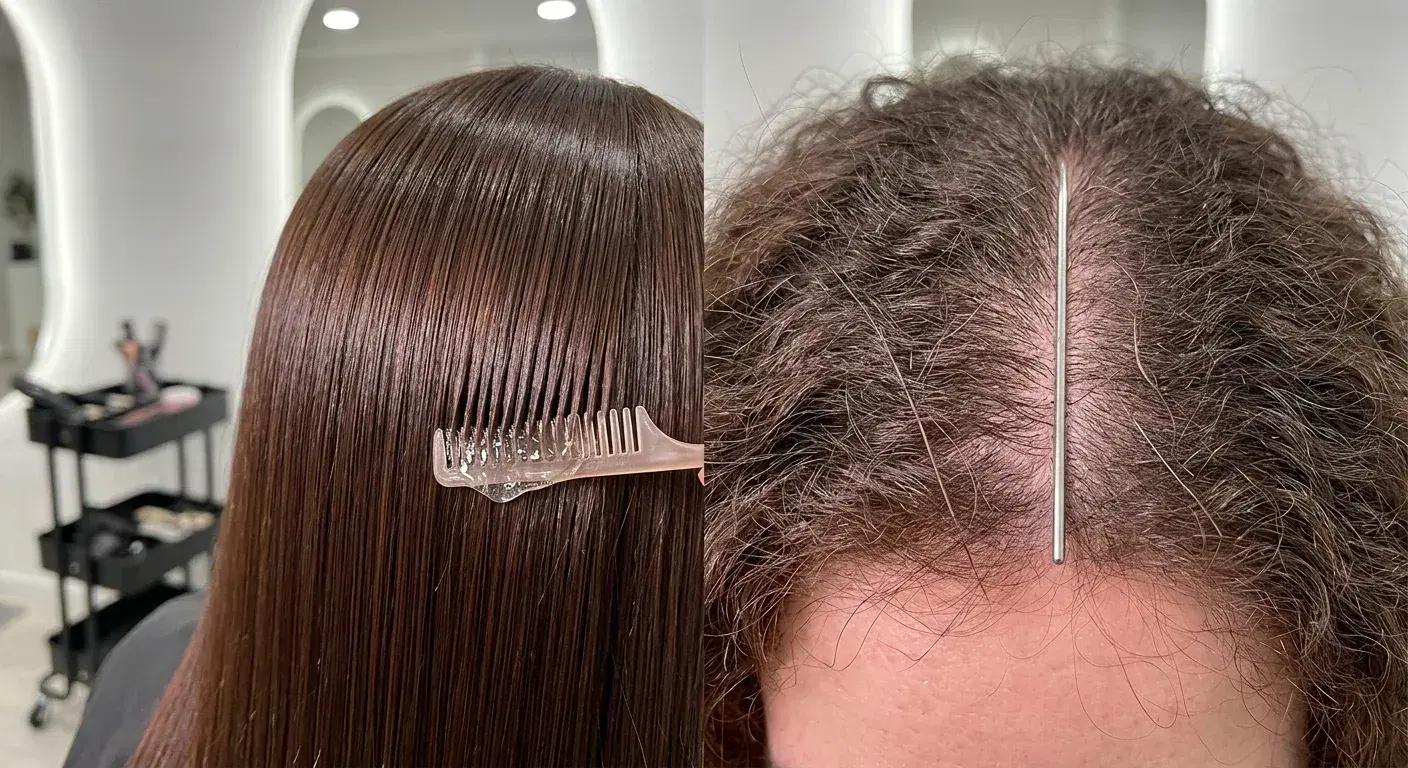
What Are Keratin Hair Treatments and How Do They Work?
Keratin is a structural protein that forms much of the hair shaft, providing strength and helping maintain its natural shape. Over time, chemical coloring, heat styling and environmental exposure can affect the outer layers of the hair, making strands feel rough, dry or difficult to manage. Keratin-based products are commonly marketed as a way to improve these cosmetic concerns.
However, the term keratin treatment describes several different products. Some conditioners and hair masks contain hydrolyzed proteins that temporarily coat the hair and improve its appearance. Professional keratin smoothing treatments involve a more intensive process, usually combining a chemical formulation with high-temperature flat ironing to create a straighter, smoother finish.
This distinction matters when evaluating hair loss risks. A conditioning mask and a chemical straightening procedure do not expose the hair or scalp to the same ingredients, temperatures or mechanical stress. Understanding which treatment was used is therefore the first step in identifying why hair may appear thinner afterward.
Can Keratin Treatments Cause Hair Loss?
Keratin treatments can contribute to hair damage and, in certain circumstances, hair loss, but they do not automatically cause follicles to stop growing. The most common concern involves breakage along the hair shaft, which can make hair appear thinner even when the follicles beneath the scalp remain healthy.
During chemical smoothing, the hair is exposed to substances that alter its physical properties, followed by heat that helps produce the desired appearance. Although the finished strands may initially feel silky and manageable, the process can weaken their internal structure, especially when the hair has already undergone bleaching or repeated coloring.
A separate concern involves scalp irritation. Strong formulations can cause contact dermatitis, inflammation or chemical burns when they come into contact with sensitive skin. Severe injury may affect the follicles themselves, making it important to distinguish ordinary cosmetic damage from a genuine scalp reaction.
Not every episode of shedding after keratin treatment is caused by the procedure. Hormonal changes, hereditary thinning, nutritional deficiencies and other health conditions can become noticeable around the same time, creating an association that requires closer examination.
How Keratin Straightening Can Damage Hair
Hair damage after keratin treatment usually develops through a combination of chemical exposure, elevated temperatures and repeated manipulation of the strands. The extent of damage depends on the product formulation, the condition of the hair before treatment and how the procedure is performed.
High Temperatures and Hair Shaft Weakening
Many smoothing procedures require a flat iron to be passed repeatedly over individual sections of hair. High temperatures help achieve a smooth appearance, but excessive heating can damage the cuticle, which forms the protective outer layer of the hair shaft.
When the cuticle becomes compromised, the inner hair structure is more vulnerable to friction and mechanical stress. Strands may gradually lose strength, develop split ends or snap during brushing, even when they initially look shinier after treatment.
This explains why a smooth finish does not always indicate healthier hair. Cosmetic appearance and structural strength are different characteristics, and repeated chemical processing can improve one while weakening the other.
Chemical Processing and Scalp Irritation
Some keratin smoothing formulations contain powerful ingredients that can irritate the scalp when applied incorrectly or left in contact with the skin. A person may experience burning, redness, itching or tenderness during treatment, particularly if the scalp is already sensitive.
These symptoms should not be dismissed as an expected part of achieving straighter hair. Persistent discomfort may indicate chemical irritation or an allergic reaction, both of which require stopping exposure rather than continuing the procedure.
When inflammation becomes severe, the surrounding follicular environment may also be affected. Significant burns can cause lasting skin damage, although this outcome is not representative of every keratin treatment.
Repeated Treatments on Already Damaged Hair
Hair that has undergone bleaching, permanent coloring or previous straightening may have reduced resistance to further processing. Applying another intensive treatment before the existing strands have recovered can increase cumulative damage.
The greatest risk often develops where new chemical applications overlap with previously treated lengths. These sections may become especially fragile, producing breakage that becomes more visible after several washing and styling sessions.
For this reason, the condition of the hair before treatment matters just as much as its immediate appearance afterward.
Hair Breakage vs Hair Shedding After Keratin Treatment
Hair breakage and hair shedding can look similar when strands collect in the shower or hairbrush, but they involve different biological processes. Recognizing the distinction helps determine whether the problem is primarily cosmetic damage or a change in follicular activity.
Breakage occurs when a hair shaft snaps before completing its normal growth cycle. The resulting strands often appear shorter than the surrounding hair, with uneven lengths, rough ends and increased tangling. Hair may look noticeably thinner through the middle or ends while the density close to the scalp remains relatively unchanged.
True hair shedding occurs when a complete strand is released from its follicle. People experiencing increased shedding may notice full-length hairs during washing, a widening part or reduced coverage across the scalp. When follicular activity changes, the pattern of thinning may continue even after damaged hair products have been discontinued.
The detailed explanation of hair breakage versus hair loss provides additional guidance on identifying these differences before choosing an appropriate recovery approach.
Why Does Hair Look Thinner After a Keratin Treatment?
A reduction in hair volume after keratin treatment does not necessarily indicate that hair has been lost. Smoothing procedures can flatten naturally curly or textured strands, reducing the space between individual hairs and changing how much fullness the hairstyle appears to have.
This effect becomes particularly noticeable in people whose hair previously relied on waves, curls or frizz to create volume. Once those characteristics are reduced, the scalp may become more visible beneath otherwise intact strands.
Actual breakage can produce a similar appearance, but the underlying process is different. Damaged sections may gradually lose length and density as weakened strands snap, particularly after washing or styling.
Examining whether the hair is simply flatter, breaking along its length or shedding from the scalp helps establish what has changed. Assuming every reduction in volume represents follicular hair loss can lead to unnecessary treatments that do not address the real problem.
Are Formaldehyde-Free Keratin Treatments Safer?
Some chemical smoothing products contain formaldehyde or ingredients that release formaldehyde when heated. Exposure to the resulting fumes can irritate the eyes, nose and respiratory system, while contact with the skin may cause sensitivity or dermatitis. Formaldehyde also presents more serious health concerns with sufficient exposure.
Ingredients such as formalin and methylene glycol can indicate the presence of formaldehyde-related compounds. Products promoted as formaldehyde-free should not automatically be assumed harmless, since the label alone may not fully describe what occurs when the formulation is heated.
Other straightening systems use acidic compounds, including glyoxylic acid or related ingredients. Research has shown that certain acid-based treatments can alter hair structure and contribute to protein loss or weakened fibers. Glyoxylic acid-containing straightening products have also been associated with reports of acute kidney injury, making ingredient assessment important beyond hair damage alone.
Before chemical smoothing, reviewing the complete ingredient information and the product's safety instructions is more meaningful than relying exclusively on terms such as natural, organic or protein-enriched.
Who Is More Likely to Experience Damage From Keratin Treatments?
People with bleached, frequently colored or previously chemically straightened hair may face greater breakage risks because their strands have already experienced structural changes. Fine or fragile hair can also become vulnerable when repeated heat passes and strong formulations overwhelm its ability to tolerate processing.
Existing scalp conditions introduce another concern. Individuals experiencing eczema, contact dermatitis, unexplained itching or active inflammation may react more strongly to ingredients that would otherwise produce limited irritation.
Hair that is already thinning deserves particular attention because further breakage can make reduced coverage more noticeable. Chemical straightening does not treat androgenetic alopecia, and a smoother appearance does not correct the follicular miniaturization responsible for hereditary hair loss.
Evaluating these factors before treatment helps avoid placing additional stress on hair that is already compromised.
How Soon Can Hair Loss Start After Keratin Treatment?
Hair breakage may become apparent immediately after an aggressive procedure, particularly when strands feel unusually rough, stretch excessively or snap during styling. In other cases, damage becomes more noticeable over the following weeks as repeated washing and brushing expose weakened sections.
Scalp irritation can also begin during application or shortly afterward. Burning, redness or persistent tenderness suggests a different problem from ordinary breakage and should be assessed promptly.
True shedding from the follicles may follow a different timeline. When significant physiological stress or inflammation disrupts the hair growth cycle, increased shedding can appear several weeks or months later rather than immediately.
The timing provides useful clues, but it does not establish the cause on its own. A person who begins shedding two months after smoothing may also have experienced illness, weight changes, medication adjustments or other events capable of influencing hair growth.
Is Hair Loss From Keratin Treatment Permanent?
Most hair breakage associated with keratin treatment does not represent permanent follicular damage. When the problem affects the visible shaft, the follicle can continue producing new hair, although the damaged section cannot biologically repair itself once it has emerged from the scalp.
Recovery therefore involves protecting new growth while gradually replacing weakened lengths. Because scalp hair grows slowly, restoring the previous appearance can take several months or longer, particularly when breakage affects a large portion of the hairstyle.
Hair loss associated with temporary scalp inflammation may also improve once the triggering condition resolves. However, severe chemical burns can damage deeper skin structures, and scarring injuries may cause permanent follicular loss.
Continued thinning should not automatically be attributed to keratin treatment, especially when the pattern involves progressive recession or a widening central part. These changes may indicate an underlying condition that requires a separate assessment.
What to Do If Hair Starts Falling Out After Keratin Treatment
The first step is to avoid repeating the chemical procedure while the cause of the problem remains unclear. Additional smoothing, bleaching or high-temperature styling may worsen existing damage and make it more difficult to distinguish breakage from shedding.
Pay attention to the appearance of the affected hair and scalp. Short broken strands suggest shaft damage, while increased full-length shedding may involve the growth cycle. Redness, burning, flaking or painful areas indicate that the skin itself requires attention.
Keeping a record of when the treatment occurred, which products were used and when symptoms began can help identify a possible connection. Photographing the hairline, part and crown under similar lighting can also provide a clearer picture of whether density is genuinely changing.
If the reaction involves scalp burns, blistering, severe pain or significant shedding, a dermatological evaluation is more appropriate than experimenting with additional cosmetic treatments.
How to Repair Hair Damaged by Keratin Treatment
Hair that has become fragile after chemical smoothing benefits from a routine designed to reduce further mechanical damage. Gentle shampoos, moisturizing conditioners and suitable leave-in products can improve manageability while limiting friction during brushing.
Reducing heat styling is particularly important because repeatedly exposing weakened strands to high temperatures can increase breakage. When drying is necessary, lower temperature settings and careful handling help preserve the condition of the remaining hair.
Protein-containing conditioners may temporarily improve how the hair feels, but no cosmetic product can permanently restore a severely damaged shaft to its original structure. Split ends and substantially weakened sections may eventually need trimming as stronger new hair grows.
Recovery also requires realistic expectations. Products marketed as immediate hair repair solutions can improve softness and appearance, but regaining lost length depends on normal follicular growth and preventing further breakage.
Can You Have Another Keratin Treatment After Hair Loss?
Repeating keratin treatment after noticeable breakage or scalp irritation is not advisable until the cause has been identified and the affected hair has recovered sufficiently. Applying another chemical process to already fragile strands can intensify damage rather than restore smoothness.
If the previous treatment caused a significant skin reaction, identifying the responsible ingredients becomes especially important. Exposure to the same substances may trigger another reaction, and repeated contact can sometimes worsen sensitivity.
People experiencing ongoing follicular hair loss should address that condition before considering further chemical styling. Making hair temporarily smoother does not reverse the underlying cause of thinning.
For some individuals, avoiding intensive straightening altogether may offer a more sustainable approach to maintaining hair strength and scalp comfort.
Safer Alternatives to Chemical Keratin Straightening
People who want smoother hair without intensive chemical processing can begin with conditioning products designed to improve hydration and reduce friction. Leave-in conditioners, silicone-based smoothing products and carefully selected hair masks may improve manageability without permanently changing the hair's natural structure.
Gentle blow-drying at lower temperatures can also reduce frizz, although repeated heat styling should still be limited when the hair is fragile. Using appropriate tools and avoiding excessive pulling helps prevent mechanical damage during the styling process.
These alternatives may not produce the same long-lasting straightness as chemical smoothing. However, preserving the natural hair structure can be a worthwhile compromise when the priority is reducing breakage and maintaining healthy-looking strands.
The most appropriate routine is one that improves everyday manageability without exposing already weakened hair to further unnecessary stress.
When Should You See a Dermatologist About Hair Loss?
Hair loss that continues despite stopping chemical treatments deserves further investigation, particularly when it involves progressive thinning, patchy bald areas or changes in the scalp itself. Persistent itching, scaling, tenderness and visible inflammation can indicate a condition that requires medical treatment rather than ordinary conditioning.
A dermatological examination can distinguish hair shaft damage from follicular disorders and identify whether hereditary thinning, inflammatory disease or another cause is contributing to the symptoms. This distinction prevents unnecessary cosmetic procedures from delaying appropriate care.
Understanding the signs that hair loss needs a dermatological assessment can help clarify when changes in hair density or scalp health should receive closer attention.
Frequently Asked Questions About Keratin Treatments and Hair Loss
The following questions address common concerns about regrowth, thinning hair and the potential effects of repeated smoothing treatments.
Will hair grow back after a damaging keratin treatment? Hair can continue growing normally when the damage is limited to the hair shaft and the underlying follicles remain healthy. Restoring the previous appearance may take several months because weakened lengths must gradually be replaced by new growth, while severe scalp injuries require separate assessment.
Can keratin treatment make already thinning hair worse? Chemical smoothing can increase the appearance of thinning by reducing volume or causing additional breakage in fragile strands. It does not treat hereditary hair loss, and aggressive processing may make existing density problems more noticeable without being the original cause of follicular thinning.
Does keratin shampoo cause hair loss? Ordinary keratin-containing shampoos are different from chemical straightening treatments and are not generally expected to cause hair loss simply because they contain keratin. However, any shampoo may cause irritation in someone sensitive to its ingredients, making persistent itching, redness or shedding a reason to reassess the product and scalp condition.
Final Thoughts on Keratin Treatments and Hair Loss
Keratin treatments can improve the cosmetic appearance of hair, but chemical smoothing and intensive heat may also weaken strands, irritate the scalp and contribute to hair loss concerns. The most common distinction involves hair breakage rather than permanent damage to the follicles, although severe chemical reactions can create more significant risks.
Understanding the treatment ingredients, existing hair condition and nature of the symptoms is essential before choosing another smoothing procedure. Gentle hair care, reduced heat exposure and appropriate assessment of persistent shedding can help protect the hair while addressing the actual cause of thinning.