
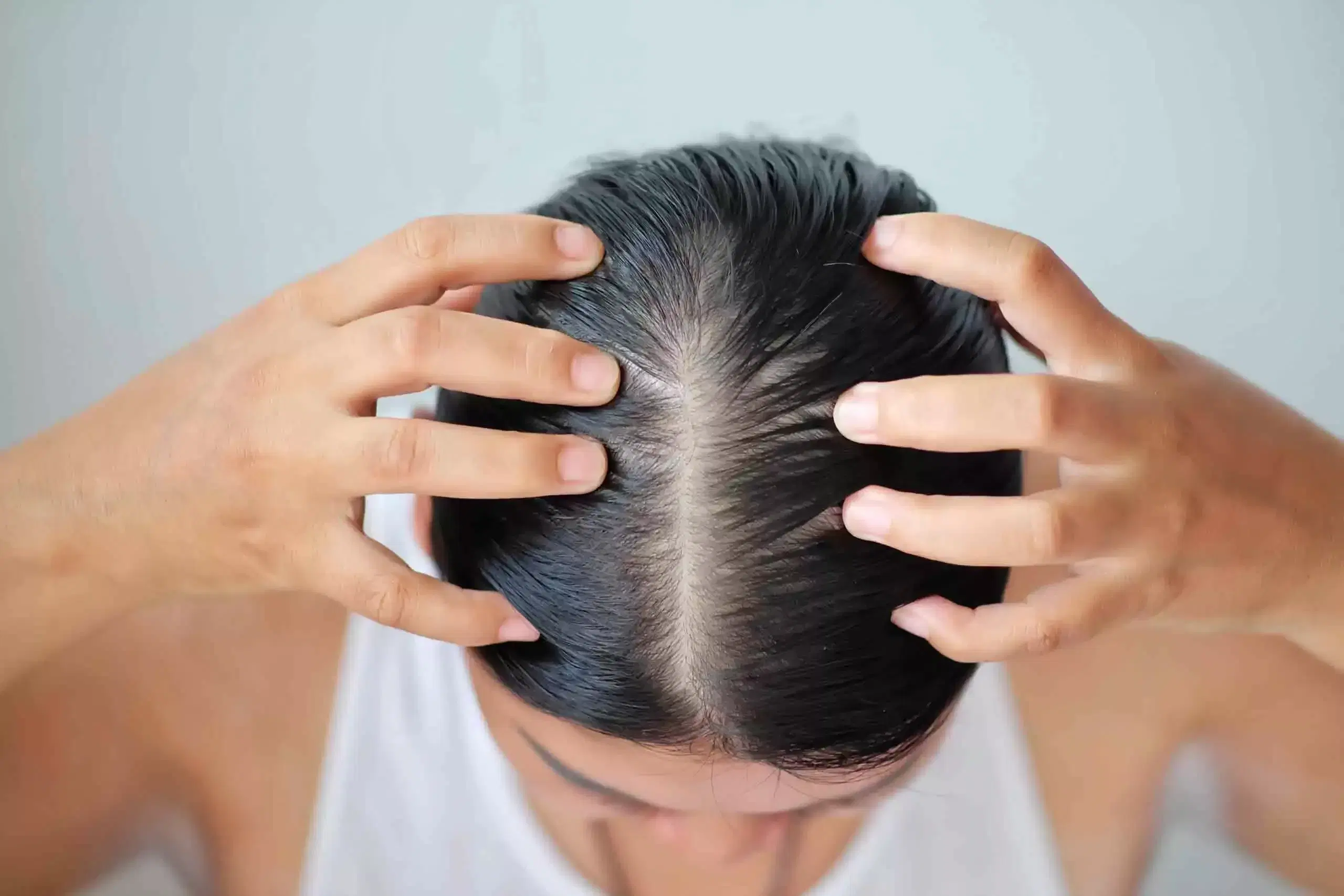
Spironolactone for female hair loss is a prescription treatment that may reduce progressive hair thinning by limiting the effects of androgen hormones on sensitive hair follicles. It is primarily used for female pattern hair loss, helping preserve existing hair density and potentially encouraging thicker growth over several months of consistent treatment.
What Is Spironolactone and Why Is It Used for Female Hair Loss?
Spironolactone is a prescription medication originally developed to treat high blood pressure, fluid retention and certain conditions involving excessive aldosterone activity. Although it belongs to a group of medicines called potassium-sparing diuretics, it also has antiandrogenic properties that make it useful for managing some hormone-related skin and hair conditions.
Female pattern hair loss, also known as female androgenetic alopecia, develops when genetically susceptible follicles gradually produce thinner and shorter hair strands. This process, called follicular miniaturization, reduces visible hair density over time and commonly causes widening of the central part or thinning across the crown.
Spironolactone helps address the hormonal influences involved in this process rather than simply stimulating hair growth at the scalp surface. Its use for female hair loss is considered off-label in the United States, meaning the medication is approved for other conditions but is also prescribed for hair thinning based on available clinical evidence.
How Does Spironolactone Work for Hair Growth?
Spironolactone works primarily by interfering with androgen activity, which influences hair follicle behavior in individuals with hereditary susceptibility. Androgens include testosterone and dihydrotestosterone, commonly known as DHT, both of which can interact with receptors in hair follicles.
Reducing Androgen Activity in Hair Follicles
Spironolactone blocks androgen receptors in certain tissues, reducing the ability of these hormones to influence susceptible follicles. It can also affect androgen production, although its receptor-blocking activity remains particularly relevant to female pattern hair loss.
This distinction matters because many women experiencing androgenetic alopecia have normal circulating testosterone levels. The problem often involves how individual follicles respond to hormonal signals rather than an unusually high concentration of hormones in the bloodstream.
By limiting androgen-related activity, spironolactone may help slow follicular miniaturization and preserve the diameter of existing hair strands.
Supporting the Natural Hair Growth Cycle
Hair follicles move through active growth, transition, resting and shedding phases. In female pattern hair loss, the active growth phase can become shorter, while successive growth cycles produce increasingly fine strands.
Spironolactone may help maintain healthier follicular activity by reducing hormonal influences that contribute to this progression. However, it does not create new follicles or immediately restore areas where permanent follicular loss has occurred.
Who Is a Suitable Candidate for Spironolactone Treatment?
Spironolactone is primarily considered for adult women experiencing gradual thinning associated with androgenetic alopecia. Typical signs include reduced hair volume, a widening central part and increasing visibility of the scalp under bright lighting.
Women with polycystic ovary syndrome, or PCOS, may also experience androgen-related hair thinning alongside symptoms such as acne, irregular menstrual cycles or increased facial hair growth. Spironolactone can be particularly relevant when several of these androgen-sensitive conditions occur together.
However, not every type of female hair loss responds to antiandrogen treatment. Sudden shedding caused by illness, iron deficiency, thyroid dysfunction or major physiological stress may require a different approach because these conditions do not necessarily involve androgen-driven follicular miniaturization.
How Effective Is Spironolactone for Female Pattern Hair Loss?
Clinical research suggests that spironolactone can help stabilize hair loss and improve visible density in a meaningful proportion of women, although the strength of the evidence remains more limited than that supporting topical minoxidil.
A systematic review published in 2023 reported improvement in approximately 56.6% of patients receiving spironolactone-based treatment. Improvements appeared more frequent among women receiving combination therapy, although substantial differences between individual studies make precise response rates difficult to establish.
A randomized trial published in 2025 investigated 100 mg of spironolactone daily alongside topical minoxidil over 24 weeks. Women receiving spironolactone showed greater improvement in photographic assessments than those receiving placebo alongside minoxidil, but differences in measured hair counts and thickness did not reach conventional statistical significance.
These findings suggest a potential additional benefit rather than guaranteed regrowth. For some women, maintaining existing density and preventing further deterioration may represent the most meaningful outcome.
How Long Does Spironolactone Take to Work for Hair Loss?
Spironolactone requires patience because changes in follicular activity only become visible as new hair develops through successive growth cycles. Most women need approximately six to twelve months of consistent treatment before its effectiveness can be meaningfully assessed.
First Three Months of Treatment
During the initial months, the medication begins influencing androgen-related activity, but noticeable changes in hair density may remain limited. Some women observe less shedding, while others see little difference because existing strands must complete their natural growth cycle.
Months Three to Six
Between the third and sixth months, early improvements may become more apparent. Hair shedding may stabilize, and some miniaturized follicles can begin producing stronger strands, although these changes frequently remain subtle.
Months Six to Twelve
By six to twelve months, improvements in hair thickness, scalp coverage or reduced progression are generally easier to evaluate. Women responding positively may notice that their part looks narrower or that their hair feels fuller during everyday styling.
Progress can continue beyond the first year, but complete restoration of the original density should not be expected.
What Is the Recommended Spironolactone Dosage for Hair Loss?
Spironolactone doses investigated for female pattern hair loss generally range from 25 mg to 200 mg daily. Treatment commonly begins with a lower dose, such as 25 mg or 50 mg, before gradual adjustments are considered.
Doses around 100 mg daily appear frequently in clinical research, while higher amounts have also been used to manage androgen-related thinning. However, increasing the dose does not guarantee proportionally greater hair growth and can increase the likelihood of adverse effects.
The appropriate prescription requires consideration of blood pressure, kidney function, potassium balance and other medications. Spironolactone should not be started or adjusted independently because its effects extend beyond the hair follicles.
Spironolactone Side Effects: What Should Women Expect?
Spironolactone can cause side effects because it influences fluid balance, blood pressure and hormonal activity throughout the body. Many reactions are manageable, but some require medical attention or changes to the treatment plan.
Commonly reported symptoms include increased urination, dizziness, fatigue, breast tenderness and menstrual irregularities. Changes in menstrual bleeding may include spotting, altered cycle timing or irregular periods, particularly at higher doses.
The medication can also lower blood pressure, occasionally causing lightheadedness when standing up quickly. Maintaining appropriate hydration is important, although excessive fluid intake does not prevent every medication-related problem.
More serious concerns involve elevated blood potassium levels and impaired kidney function. Severe weakness, fainting, palpitations or an irregular heartbeat require prompt medical evaluation rather than simply discontinuing the medication without further assessment.
Potassium Levels and Kidney Function During Treatment
Spironolactone reduces potassium excretion through the kidneys, making hyperkalemia an important potential complication. This risk becomes more significant in people with impaired kidney function, certain medical conditions or medications that increase potassium levels.
Potassium supplements, potassium-containing salt substitutes and some blood pressure medications can increase the likelihood of excessive potassium accumulation. Certain anti-inflammatory medications may also create additional risks when used regularly.
Blood tests assessing kidney function and potassium levels provide important safety information before and during treatment. Monitoring needs particular attention after dose changes and in people with additional risk factors, although serious potassium abnormalities are less common in otherwise healthy younger women.
Can Spironolactone Be Taken During Pregnancy?
Spironolactone should be avoided during pregnancy because its antiandrogenic effects may interfere with fetal sexual development, particularly in male fetuses.
Women who could become pregnant should discuss reliable contraception before beginning treatment. Those planning pregnancy need an appropriate medication discontinuation plan rather than continuing spironolactone throughout the conception period.
Breastfeeding involves separate considerations because small amounts of a spironolactone metabolite can enter breast milk. Although available information suggests relatively low infant exposure, its use for elective hair loss treatment should still be reviewed during breastfeeding.
Reproductive safety remains essential because female pattern hair loss often requires treatment over an extended period.
Spironolactone vs Minoxidil for Female Hair Loss
Spironolactone and minoxidil address different aspects of hair loss, making them potentially complementary rather than interchangeable treatments.
Spironolactone reduces androgen-related influences on susceptible follicles, while minoxidil supports hair growth through mechanisms that encourage follicular activity and prolong the growing phase.
Topical minoxidil has established regulatory approval for female pattern hair loss and a stronger evidence base from controlled clinical trials. Spironolactone is used off-label and may provide additional benefits when hormonal sensitivity contributes to progressive thinning.
Combining the two medications can be considered when the intended treatment involves both growth stimulation and control of androgen-related miniaturization. However, combination therapy also requires attention to tolerability and the risks associated with each medication.
Is Topical Spironolactone Effective for Hair Growth?
Topical spironolactone has attracted interest as an alternative approach that delivers the active ingredient directly to the scalp. Researchers have investigated formulations containing different concentrations, including 1% gels and 5% solutions.
Small clinical investigations have reported improvements in certain hair growth measurements, but evidence remains insufficient to establish topical spironolactone as equivalent to oral treatment or approved topical minoxidil.
Absorption, formulation stability and skin irritation may influence its effectiveness. Topical spironolactone products are not currently established as standard approved treatments for female pattern hair loss in the United States.
Does Spironolactone Work for All Types of Female Hair Loss?
Spironolactone primarily addresses androgen-sensitive hair follicles, so its usefulness is limited when hair loss develops through unrelated mechanisms.
Telogen effluvium, for example, can occur following illness, rapid weight loss, childbirth or significant physiological stress. This condition involves increased shedding as follicles enter the resting phase, rather than necessarily undergoing androgen-driven miniaturization.
Alopecia areata develops through an autoimmune process, while scarring alopecias involve inflammatory damage that can permanently destroy follicles. Spironolactone does not directly treat the underlying causes of these conditions.
Identifying the hair loss pattern before treatment is therefore important, particularly when shedding develops suddenly or appears alongside scalp inflammation, discomfort or distinct bald patches.
What Happens When You Stop Taking Spironolactone?
Spironolactone does not permanently eliminate the biological susceptibility responsible for female pattern hair loss. Its protective effects depend on continued treatment, meaning follicular miniaturization may gradually resume after the medication is discontinued.
Hair gained or preserved during treatment can become thinner over subsequent months as androgen-related activity returns to its previous level. This does not mean spironolactone caused additional hair loss, but rather that the underlying condition remains active.
Discontinuation because of pregnancy planning, adverse effects or other medical concerns should therefore involve an appropriate transition plan that considers the long-term management of hair thinning.
How to Track Hair Growth While Taking Spironolactone
Hair growth changes occur slowly, making daily mirror comparisons an unreliable method of evaluating treatment response. Consistent photographs taken every one or two months can provide a clearer record of changes in the hairline, central part and crown.
Images should use similar lighting, angles and hairstyles because differences in these conditions can exaggerate or conceal apparent thinning.
Reduced shedding, improved strand thickness and stable scalp coverage may all indicate a positive response. However, the absence of dramatic regrowth does not automatically mean that treatment has failed if progressive hair loss has successfully stabilized.